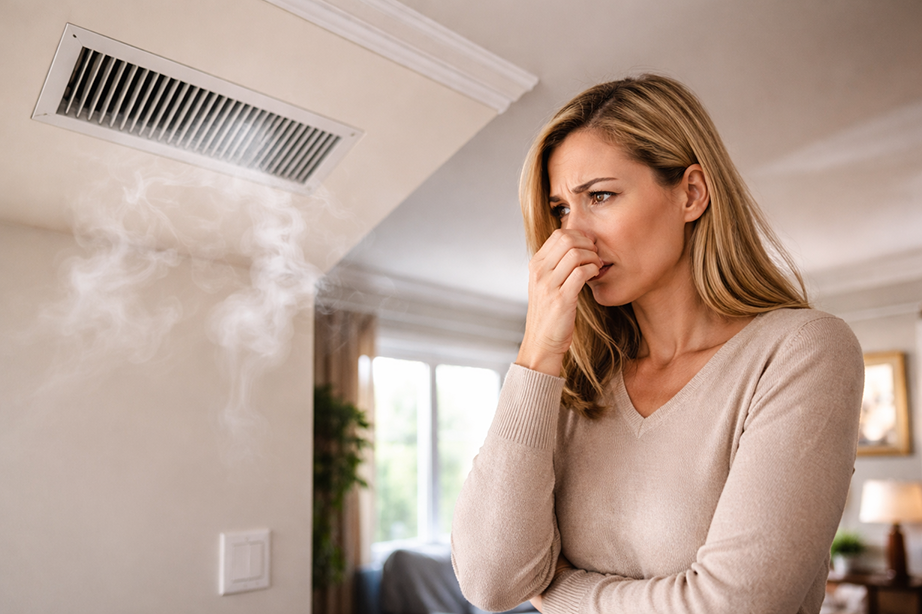
Why Your Home’s HVAC System Smells Weird (And What It Really Means)
January 22, 2026Strange smells coming from your HVAC system have a way of grabbing your attention, and then being quickly ignored. Life gets busy. We get it. But here’s the truth: HVAC smells are rarely meaningless.
Maybe the odor only lasts a few minutes. Maybe it shows up at the start of the season and fades. Or maybe you’ve noticed it so often that it’s become part of the background. Whatever the case, it’s best to get to the bottom of the smell rather than leaving it to linger.
Your heating and cooling system moves air through every room in your home. When that air carries an unusual odor, it’s often a sign that something inside the system needs attention. Sometimes it’s minor. Other times, it’s your system’s early warning signal, and catching it early can save you money, discomfort, or even safety concerns.
Understanding what these smells mean gives homeowners clarity, confidence, and the ability to act before small issues become big ones.
You Smell Something. Now What?
The first reaction most homeowners have when they notice an HVAC smell is uncertainty. Is it normal? Is it temporary? Should I be worried?
Because odors don’t always come with obvious system failure, they’re easy to dismiss. Many people assume the smell will “burn off” or disappear after the system runs for a while. While that does happen in some cases, it’s far more common for odors to indicate airflow passing over something that shouldn’t be there, dust, moisture, bacteria, overheating components, or fuel-related issues.
At a basic level, your HVAC system is constantly pulling air in, conditioning it, and sending it back out. When a smell appears, it’s your cue to slow down and pay attention. The goal isn’t panic, it’s awareness. The sooner you understand the cause, the easier it is to address.
Common HVAC Odors and What They Mean
Once you know odors aren’t random, the next step is identifying what kind of smell you’re dealing with. Different smells point to different issues, and understanding the difference helps you know what’s urgent and what’s not.
Below are the most common HVAC-related odors homeowners experience, along with what’s typically happening behind the scenes.
Musty or Moldy Smell
A musty or moldy smell is one of the most common complaints homeowners report, especially when running the air conditioner during warm, humid months.
This type of odor usually suggests excess moisture somewhere in the system. Condensation can build up on evaporator coils, inside ductwork, or near drain pans. When moisture combines with dust and organic material, it creates the perfect environment for mold and bacteria to grow.
The reason this smell matters isn’t just comfort, it’s air quality. When mold or bacteria are present, spores and particles can circulate throughout the home, potentially irritating allergies or respiratory conditions.
Homeowners can start by replacing the air filter and checking visible vents for moisture or buildup. If the smell lingers, professional inspection and cleaning are often needed to fully resolve the issue.
Burning Plastic or Electrical Smell
A burning plastic or electrical smell tends to be sharp, noticeable, and unsettling, and for good reason.
This odor often indicates overheating electrical components, damaged wiring, or a motor under strain. While it might appear briefly at startup, especially in older systems, any persistent burning smell should be taken seriously.
Electrical issues can escalate quickly. What starts as overheating can eventually lead to component failure or, in rare cases, fire risk. If you experience this smell, don’t wait. Contact a HVAC professional today to get an evaluation.
If you notice this type of smell, the safest step is to turn the system off and contact a professional. Electrical problems are not something homeowners should attempt to diagnose on their own.
Rotten Egg or Sulfur Smell
A sulfur or rotten egg smell is one odor that should never be ignored.
Natural gas is odorless by nature, so utility companies add a sulfur-like scent to make leaks easy to detect. If that smell is present when your heating system is running, it may indicate a gas leak or combustion issue.
This situation goes beyond comfort and enters the realm of safety. Gas-related issues can pose serious risks if not addressed immediately.
If you smell gas, shut off the system, ventilate the area if possible, and contact your gas provider or HVAC professional right away.
Dirty Sock Smell (Common in AC Systems)
The so-called “dirty sock smell” is unpleasant but surprisingly common, particularly in air conditioning systems.
This odor is usually caused by bacterial growth on evaporator coils, where moisture and dust collect during normal operation. When the AC runs, air passes over the bacteria and carries the smell into the home.
While this smell isn’t always dangerous, it’s a sign that the system isn’t operating as cleanly or efficiently as it should. Over time, it can contribute to reduced performance and poor indoor air quality.
Filter changes can help, but professional coil cleaning or treatment is often the most effective long-term solution.
Fuel or Kerosene Smell During Heating
If your furnace produces a fuel or kerosene-like smell while running, it may indicate incomplete combustion.
This means fuel isn’t burning as efficiently as it should. While brief odors at startup can be normal, ongoing fuel smells deserve attention.
Incomplete combustion can affect performance and may increase the risk of carbon monoxide concerns if left unaddressed. A professional inspection ensures the system is burning cleanly and safely.
When a Smell Means Stop Using the System
Not every HVAC odor requires immediate shutdown, but some absolutely do.
If you notice strong gas odors, persistent burning smells, or experience symptoms like dizziness, headaches, or nausea alongside unusual smells, it’s time to stop using the system. These are indicators that something may be unsafe.
Shutting the system down and calling a professional isn’t overreacting, it’s protecting your home and the people inside it.
DIY Checks Homeowners Can Safely Do
Before scheduling service, there are a few simple and safe steps homeowners can take that may help clarify the issue or even resolve minor problems.
Start by replacing the air filter if it hasn’t been changed recently. Check vents for visible dust buildup or blockages. Pay attention to when the smell occurs, does it happen only when heating starts, only during cooling, or all the time?
These observations provide valuable context and can help a technician diagnose the issue more efficiently if professional service is needed.
How Graybill Technicians Diagnose HVAC Odors Quickly and Safely
When an odor doesn’t resolve on its own or points to a deeper issue, professional diagnosis is the best next step.
At Graybill Service Group, our technicians approach odor complaints methodically, starting with safety checks and moving through system components to identify the root cause. This includes inspecting electrical systems, checking airflow and moisture sources, evaluating combustion performance, and assessing indoor air quality when necessary.
Rather than masking symptoms, the focus is on fixing the underlying problem so the issue doesn’t return.
The Bottom Line
Strange HVAC smells aren’t just nuisances, they’re signals. Sometimes they point to simple maintenance needs. Other times, they’re early warnings of problems that could worsen if ignored.
By understanding what different odors mean and knowing when to take action, homeowners can protect their comfort, their system, and their peace of mind.